
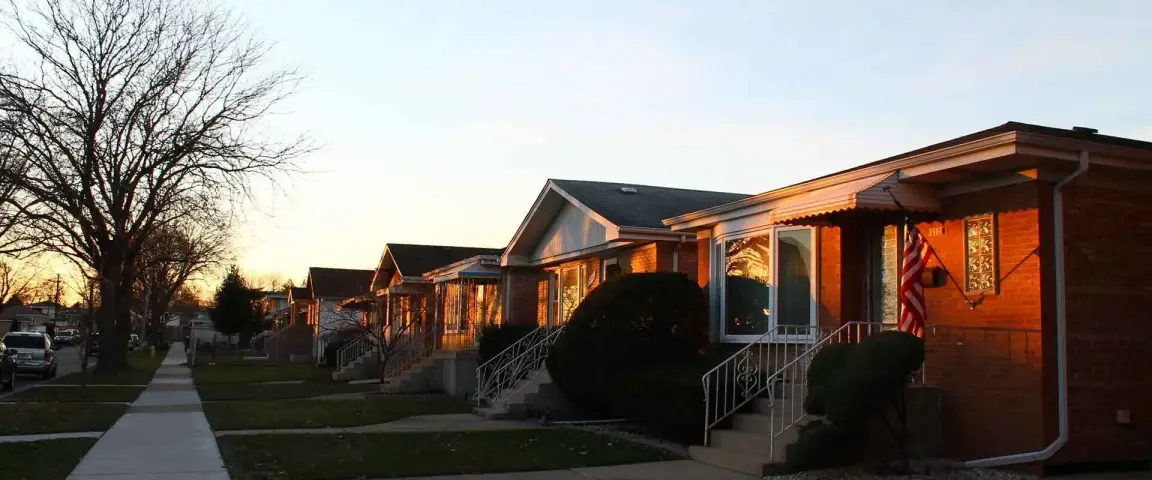
When a homeowner in North Carolina first gets a fire restoration estimate, the number is almost always wrong — not because the contractor is dishonest, but because fire damage has a way of revealing itself in layers. The quote covers what’s visible. What isn’t visible — inside walls, beneath subfloors, inside ductwork, in the attic — surfaces weeks into the project and rewrites the budget entirely.
This guide covers what a standard restoration estimate typically misses: the hidden costs that catch NC homeowners off guard mid-project, drain insurance payouts, and turn a $40,000 repair into a $120,000 ordeal. If you’re weighing whether to repair or sell as-is, understanding the full picture is the only way to make a financially sound decision.
Smoke Damage — The Cost That Goes Everywhere the Eye Can’t Follow.
Smoke is one of the most damaging elements after a fire, and it spreads far beyond the visible burn zone. In humid North CarFire burns in one place. Smoke travels through every connected space — HVAC ducts, wall cavities, attic insulation, beneath subfloors, and into appliances — often before the fire is even fully extinguished. In North Carolina’s coastal humidity, smoke particles bond more aggressively to porous surfaces, making remediation slower and more expensive than in drier climates.
What standard quotes often undercount:
• HVAC duct cleaning and decontamination — ducts distribute smoke to every room in the house, including rooms untouched by fire. Full system cleaning is typically $1,500–$4,000 alone, and replacement can run $8,000–$15,000
• Attic insulation replacement — smoke-saturated insulation cannot be cleaned; it must be entirely removed and replaced ($3,000–$8,000 depending on attic size)
• Behind-wall cavities — restoration crews cannot fully assess what’s inside walls without opening them. Scope often expands significantly once demolition begins
• Odor treatments — thermal fogging, ozone treatment, and hydroxyl generators are not one-and-done. Persistent smoke odor in NC’s humid air often requires multiple treatment cycles before a home can pass a buyer’s smell test
Realistic smoke remediation cost range: $5,000–$25,000+ — with the high end applying to homes with forced-air HVAC systems that distributed smoke throughout the structure before the fire was contained.
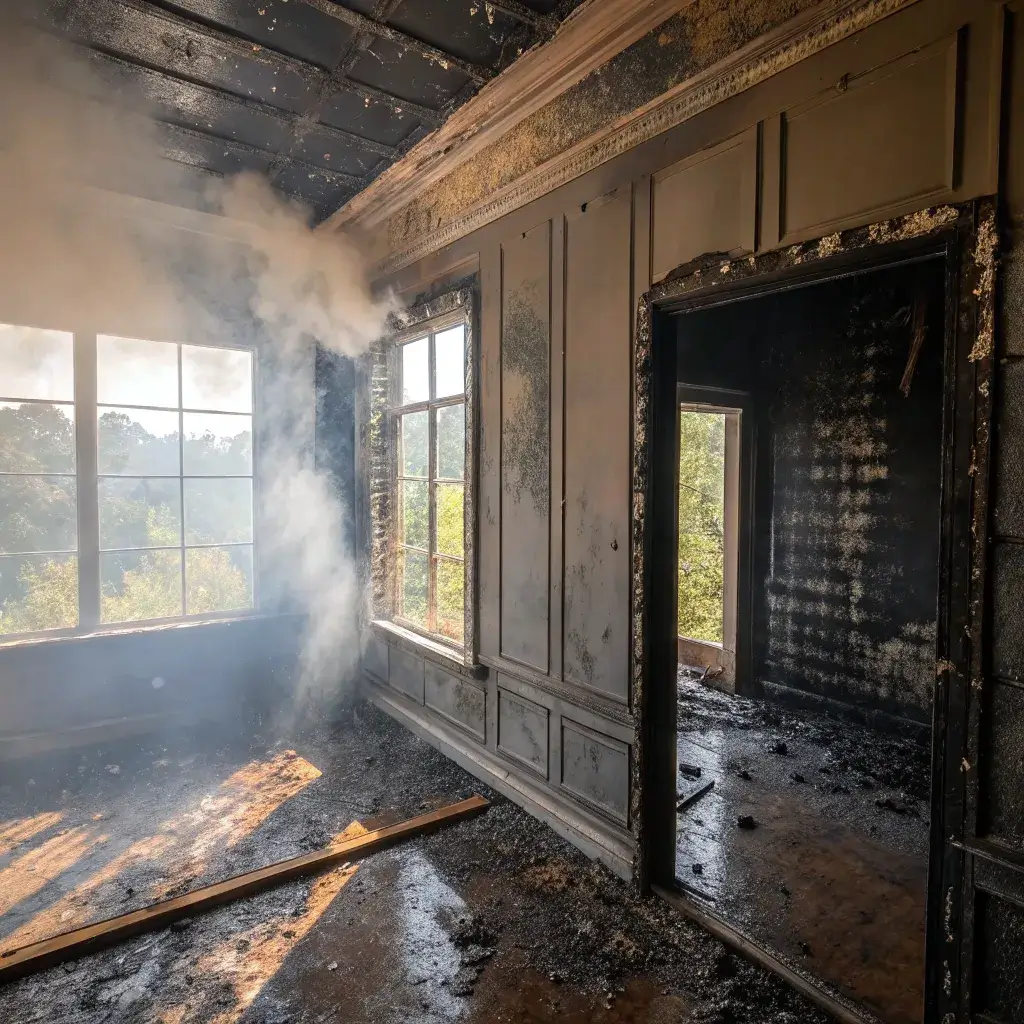
Water Damage and Mold — The Second Fire You Didn’t See Coming.
Firefighters use thousands of gallons of water to extinguish flames — and that water becomes a new hazard. In North A structure fire triggers two simultaneous damage events: the fire itself and the water used to fight it. Firefighting water — thousands of gallons in many cases — floods the structure faster than any natural leak and saturates materials that might have otherwise survived the fire intact.
In coastal North Carolina, where ambient humidity is already high, mold can begin developing in saturated materials within 24–48 hours. This creates a narrow window for proper drying — and most homeowners aren’t aware fast enough to take action before colonization begins.
The hidden cost layers in this category:
• Industrial drying equipment rental and operation — professional moisture extraction runs $2,000–$6,000 before any material replacement begins
• Subfloor replacement — water-soaked subfloor often can’t be dried effectively and must be fully replaced ($4,000–$12,000 depending on square footage)
• Mold remediation — if mold is found (and it very often is in NC homes after a fire), remediation costs are separate from drying and can run $3,000–$25,000+
• Framing treatment — wood framing exposed to sustained moisture requires treatment with antimicrobial agents and inspection before it can be enclosed again
• Second inspection for mold clearance — NC remediation companies must issue a clearance report before the home can be certified mold-free, which adds an additional inspection cost and timeline
What makes this category particularly dangerous to budget: mold remediation costs are almost impossible to estimate accurately until demolition reveals the full extent of moisture penetration. Quotes given before walls are opened are educated guesses.
Structural and Electrical Repairs — Where Budgets Collapse.
Structural and electrical work is where fire restoration estimates most dramatically undercount the final cost. Both categories are heavily regulated in North Carolina, require licensed contractors, and must pass multiple municipal inspections before the home can be legally reoccupied or sold.
Electrical system replacement:
Fire degrades wire insulation even in areas that didn’t burn directly. A damaged panel or compromised wiring that isn’t fully replaced is a fire-recurrence liability — which is why NC inspectors require complete documentation and often mandate full rewiring for anything beyond minor, contained fires. Cost: $8,000–$25,000+, higher for older homes with non-standard wiring.
Roof replacement:
Heat rises. Even fires that appear contained to a single floor often damage roof trusses and decking. In coastal NC, roofing materials must meet specific wind-resistance standards, adding cost beyond standard inland replacements. Cost: $8,000–$35,000 depending on roof size, pitch, and material specification.
Structural framing repair:
Load-bearing wall and beam repair is the most unpredictable line item in any fire restoration. The full scope is almost never known until demolition is complete. Engineers must certify repairs, adding both time and cost. Range: $4,000–$60,000+, with total-loss structural situations running significantly higher.
Drywall, insulation, and interior finishes:
These are the most visible costs but among the easier to estimate accurately. Expect $5,000–$18,000 depending on how many rooms were affected and the level of finish specification.
Permitting and re-inspection fees — the line item nobody quotes upfront:
Every category above requires permits from your local NC municipality. New Hanover County, Brunswick County, and Pender County each have their own fee schedules and inspection timelines. Multiple failed inspections — which are common in complex restorations — each trigger re-inspection fees and add weeks to the timeline. Budget $1,500–$5,000 for permitting costs alone, and factor in the carrying costs of each additional week of delay.
Temporary Housing — The Hidden Cost That Runs for Months.
Fire restoration in North Carolina doesn’t happen in two weeks. A mid-severity restoration project typically runs 3–6 months. More complex structural work can stretch to 9–12 months or longer, particularly when contractor availability is constrained after storm seasons in coastal NC.
During that entire period, your family needs a place to live. If your homeowner’s insurance includes Additional Living Expense (ALE) coverage, it will offset some of this — but ALE limits are capped, and the coverage clock starts running the moment you file your claim.
What homeowners frequently don’t budget for:
• ALE coverage limits — most policies cap ALE at 20–30% of the dwelling coverage. On a $200,000 policy, that’s $40,000–$60,000 total. For a 9-month restoration in a Wilmington rental market where average 3-bedroom rents run $1,800–$2,400/month, that coverage can exhaust before the home is ready
• Storage costs for salvaged belongings — furniture, appliances, and personal items retrieved from the home need climate-controlled storage during restoration ($150–$400/month)
• Duplicate utility costs — you pay utilities at both your temporary housing and the restoration property if any systems remain active
• Pet boarding — many short-term rentals don’t allow pets; emergency boarding or extended kennel stays add up quickly
Realistic temporary housing cost over a 6-month restoration: $12,000–$20,000+, with insurance coverage absorbing a portion depending on policy terms.
The Stigma Cost — Why Full Restoration Doesn’t Restore Full Value.
Here’s the hidden cost no contractor will mention in their estimate: even after complete, professionally certified fire restoration, a North Carolina home carries a disclosure obligation and a measurable market value reduction.
NC law requires sellers to disclose past fire events on the Residential Property Disclosure Statement — regardless of how thorough the repairs were. Buyers see that disclosure. Their lenders require it. Their appraisers account for it.
Research on fire-stigmatized properties consistently shows values 10–25% below comparable homes without fire history, even after full restoration. On a home with a pre-fire value of $280,000, that’s a $28,000–$70,000 permanent value reduction — even after you’ve spent $80,000–$150,000 on repairs.
This is the calculation most restoration-minded homeowners don’t run until they’re too deep into the project to reverse course:
Pre-fire home value: $280,000
Full restoration cost: $100,000
Post-restoration market value (with stigma discount): $230,000–$252,000
Net loss after restoration: $48,000–$70,000
Selling as-is to a cash buyer — even at a below-market price — may result in a better net outcome than completing a full restoration, paying carrying costs for 6–12 months, and selling into a stigmatized market at a discounted price anyway.
That comparison is worth running honestly before committing to the restoration path.
Insurance Gaps — When Your Payout Doesn’t Cover What You Actually Owe.
Homeowner’s insurance after a fire sounds like a safety net — and it is, up to a point. The gap between what insurers pay and what restoration actually costs is where NC homeowners most often get into financial trouble.
Common insurance gap scenarios:
• Actual cash value vs. replacement cost policies — ACV policies factor in depreciation, meaning a 15-year-old roof burned in a fire gets compensated at depreciated value, not the cost of a new one. The difference on a roof can be $8,000–$15,000 out of pocket
• Policy limits that don’t reflect current construction costs — a policy written five years ago at $200,000 coverage may not reflect today’s NC material and labor costs, which have risen 25–40% since 2020
• Disputed claims and underpayments — insurance adjusters work for the insurer, not for you. Initial estimates frequently undercount damage scope, and disputing them requires time, a public adjuster, and sometimes legal action
• Coverage exclusions — certain damage types (mold, code upgrades required by current NC building codes) may be partially or fully excluded from standard policies
Homeowners who discover mid-restoration that their insurance payout has been exhausted and the project is still 40% incomplete face an impossible choice: fund the gap out of pocket, take on debt, or walk away from a partially restored property that is now worth less than the original fire-damaged home.
This scenario is more common than the insurance industry acknowledges — and it’s a risk worth understanding clearly before choosing the restoration path.
What Full Fire Restoration Really Costs in North Carolina — The Total Picture.
Adding up all cost categories for a mid-severity fire in a typical Wilmington-area home:
Smoke remediation: $5,000–$25,000
Water damage and mold: $8,000–$35,000
Structural and framing repairs: $4,000–$60,000
Electrical rewiring: $8,000–$25,000
Roof replacement: $8,000–$35,000
Drywall, insulation, finishes: $5,000–$18,000
Permits and re-inspections: $1,500–$5,000
Temporary housing (6 months): $12,000–$20,000
Contractor overhead and markups: $8,000–$20,000
Total realistic range: $59,500–$243,000+
Repair vs. sell as-is — an honest comparison:
Choose full restoration if: your insurance payout fully covers projected costs, the home’s pre-fire equity is substantial, you have time (6–12 months), and the post-stigma sale price will still yield a meaningful return.
Choose to sell as-is if: your insurance payout has gaps, your timeline is tight, the repair cost approaches or exceeds the home’s post-restoration market value, or you simply want a clean exit without months of contractor management and carrying costs.
A no-obligation cash offer from Cape Fear Cash Offer gives you a concrete number to compare against your restoration estimate — before you commit to either path.
Know What You’re Actually Choosing Between Before You Commit.
If you’re weighing fire restoration against selling as-is, the most important thing you can do right now is get both numbers. Get a restoration estimate from a licensed NC contractor — and get a cash offer from Cape Fear Cash Offer. Then run the comparison with real figures, not estimates and assumptions.
Cape Fear Cash Offer buys fire-damaged homes throughout Wilmington, Leland, Jacksonville, and coastal North Carolina — as-is, with no repair demands, no agent commissions, and no obligation. We’ll walk you through exactly how we calculated your offer so you can make an informed decision.
Most homeowners receive a written cash offer within 24–48 hours of their first contact.
Supporting Article: